2011; What it meant to me

The past 365 days have been a particularly great year for me.

There are all the obvious things that most of you already know. I’ve had my first book published to critical and public acclaim. It was even shortlisted in the BGE Irish Book Awards – (that was a shocker!) Because of the book, I’ve had the chance to meet a lot of new and fascinating people, including several fellow writers who have had nice and encouraging things to say. But the real joy has come from my many visits to schools and libraries. Meeting the children to have read or are reading my book is a pleasure incomparable to anything else. The enthusiasm kids today have for books is infectious and makes me want to go home and read/write even more.

I’ve spent a lot of the time in the past year learning how to be a writer. When I wrote the book in 2010, I kind of just stumbled into everything, feeling my way blindly. But at the start of 2011, I set myself some writing targets and got into a habit that I keep to today. Right now, I have the first drafts of the next two Arthur Quinn books complete and am working on a whole other story that I hope people will get to read one day.

My friends and family have been so supportive to me all year long that I can’t thank them enough. The same must be said for my publishers, Mercier Press, fellow authors and all the kids book enthusiasts I’ve met along the way.

But what else did 2011 mean to me? Well I thought I’d have a look back at some of my highlights. What were yours?


Read the rest of this entry »

Book Trailers

There’s a great article over at Inis Magazine that discusses the book trailer, its effectiveness and the producers’ ways of showing enough but not too much.

It got me thinking about my own book trailers. Since I come from a film background, I was, of course, excited about having a trailer for my book. Even before I had discussed the possibility with my publisher, Mercier Press, I had an idea of what the trailer should be. Dark, atmospheric, creepy were some of the adjectives that came to mind.

I had quite a bit of experience with trailers like this, having produced short viral promos for various theatrical productions over the past couple years. These plays often faced a similar problem that books do – until the production is staged, there is a lack of actual filmed footage. So I would take photographs and text and animate them to suit the piece. These trailers seemed to be quite successful in getting bums in the seats so I was certain that something similar would work for my book. Read the rest of this entry »

It’s real.

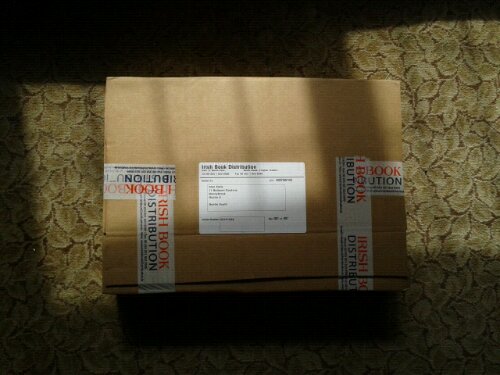
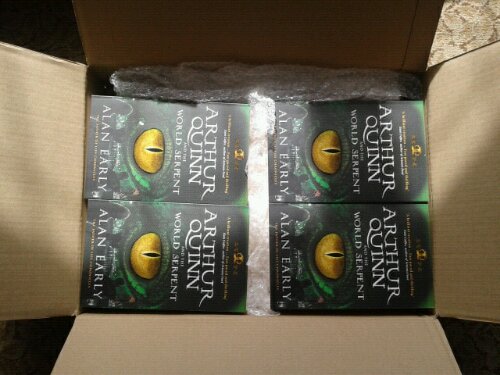
So, as you can guess from the post below, I got the first copy of my first book in the post the other day.

It’s a strange feeling, finally holding it. It’s real. I can flick through the pages, I can smell the ink, I can even crack the spine if I was so inclined. The words aren’t on a screen anymore; the characters aren’t running around my head. They’re there – on the pages of a real life book for all to read. Read the rest of this entry »

Books I Like: Point Horror

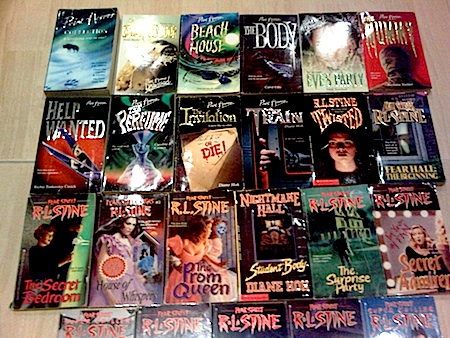
Somewhere at home, in my parents’ house, under my old bed or under stacks of broken toys in one of the wardrobes or under Christmas decorations in the attic is a box of books. There are, I would guess, 40 or 50 of these paperbacks, all the spines broken, the pages dog-eared and the covers worn. Most of them cost £3.99 at the time although as the years went by, this rose to a staggering £4.99. They all have gaudy, illustrated covers reminiscent of seventies and eighties cheap slasher films. These books are Point Horrors.

The first book I read in the series was The Babysitter by RL Stine. I don’t know what age I was – (although I’d make a guess at 10) – but the books were all about 15 and 16 year olds being stalked by serial killers or murderous ghosts and I was probably too young. From the moment I picked up The Babysitter, the Point Horror books were a constant companion for the next few years. Read the rest of this entry »

Joss Whedon’s Ten Writing Tips

A few years ago, Joss Whedon, writer of creator of Buffy among other things, shared his top 10 writing tips with 4Talent magazine. They’re mostly aimed at screenwriters but could easily apply to most types of writing, particularly any fiction. So here they are, with some of my thoughts after in italics.

1. FINISH IT

Actually finishing it is what I’m gonna put in as step one. You may laugh at this, but it’s true. I have so many friends who have written two-thirds of a screenplay, and then re-written it for about three years. Finishing a screenplay is first of all truly difficult, and secondly really liberating. Even if it’s not perfect, even if you know you’re gonna have to go back into it, type to the end. You have to have a little closure.

This is so true. There really is nothing worse than a story or script hanging over your head.- Alan


2. STRUCTURE

Structure means knowing where you’re going ; making sure you don’t meander about. Some great films have been made by meandering people, like Terrence Malick and Robert Altman, but it’s not as well done today and I don’t recommend it. I’m a structure nut. I actually make charts. Where are the jokes ? The thrills ? The romance ? Who knows what, and when ? You need these things to happen at the right times, and that’s what you build your structure around : the way you want your audience to feel. Charts, graphs, coloured pens, anything that means you don’t go in blind is useful.

Some people might not like structure but I think it’s good idea that if you do find yourself stuck to revert back to structure. I’m not big into making notes, although I have started making Post-It notes of what I’m writing that day.- Alan


3. HAVE SOMETHING TO SAY

This really should be number one. Even if you’re writing a Die Hard rip-off, have something to say about Die Hard rip-offs. The number of movies that are not about what they purport to be about is staggering. It’s rare, especially in genres, to find a movie with an idea and not just, ‘This’ll lead to many fine set-pieces’. The Island evolves into a car-chase movie, and the moments of joy are when they have clone moments and you say, ‘What does it feel like to be those guys ?’


4. EVERYBODY HAS A REASON TO LIVE

Everybody has a perspective. Everybody in your scene, including the thug flanking your bad guy, has a reason. They have their own voice, their own identity, their own history. If anyone speaks in such a way that they’re just setting up the next person’s lines, then you don’t get dialogue : you get soundbites. Not everybody has to be funny ; not everybody has to be cute ; not everybody has to be delightful, and not everybody has to speak, but if you don’t know who everybody is and why they’re there, why they’re feeling what they’re feeling and why they’re doing what they’re doing, then you’re in trouble.

This is brilliant advice and it’s so so true. The best pieces of writing always make sure everyone has a perspective. A great example of this is the George R Martin’s A Song of Fire and Ice series. Perspective just gives you more layered characters and this is vital to a good story. – Alan


5. CUT WHAT YOU LOVE

Here’s one trick that I learned early on. If something isn’t working, if you have a story that you’ve built and it’s blocked and you can’t figure it out, take your favourite scene, or your very best idea or set-piece, and cut it. It’s brutal, but sometimes inevitable. That thing may find its way back in, but cutting it is usually an enormously freeing exercise.

Read the rest of this entry »

My old typewriter

I’m at home in Leitrim for a couple days and I came across my old word processor cum typewriter. It’s bulky, weighs a tonne and it’s nigh-on impossible to get the cartridges anymore but I would hate to part with it. I wrote some of my first published stories on it. They’re probably still stored on floppy discs somewhere… And it still works! Despite being about 15 years old, it’s in better working order than any of my older laptops. I might write another story on it one day. I just need to find one that fits…